Where we are
We've done a pretty good job of setting aside natural spaces for conservation, with approximately
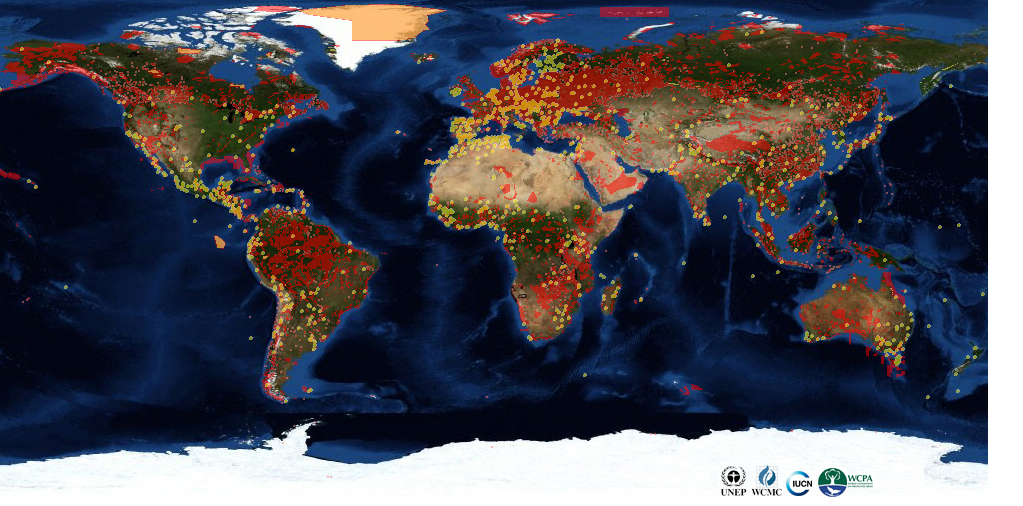
12% of the Earth's land surface is being protected today. Unfortunately, many of the spaces are poorly regulated or not well connected to other spaces, limiting their effectiveness.
12% of the Earth's land surface is being protected today
A report by the World Wildlife Federation found that while biodiversity was in general being protected in supposedly protected natural spaces, there were a lot of ways in which they could be improved. In general they found that protected spaces are understaffed and so sometimes poorly managed, with too much encroachment and illegal hunting, logging, and other resource gathering occurring. In general, the newer the park and the lower the IUCN category (on the scale from Nature Reserve to Managed Resource Reserve) the greater the occurrence of these problems. There is also the problem of not protecting enough diverse areas that may not have the tourist appeal of large parks in interesting places. There are hundreds of threatened and endangered species that have
no protected areas anywhere in their range.
The connectivity issue is another problem. While protected natural spaces are important, also important is having spaces for animals to move between protected spaces. Protected spaces are
unlikely to be widely successful without these connections. Connected spaces are the
natural state of landscape and animals are not accustomed to needing to adhere to the boundaries we set for them with our protected spaces.
A similar issue is that of climate change making the areas we have protected less than ideal for the plants and animals we are trying to protect within their borders. There's been
research since the late 1980s discussing the problem of shifting species range boundaries compared to static park boundaries. This is becoming more of an immediate issue with climate change causing changes in species ranges. It is estimated that more than half of the world's protected areas will be negatively affected by climate change, with 21 countries who will have
over 90% of their protected spaces subject to totally different climates by 2100. This means that these protected spaces, as they are, are not able to guarantee the protection of the wildlife inside their borders.
You can go to
The World Database on Protected Areas to get more information on the protected areas of the world and to use an interactive version of the map we have shown on this page.
WWF - Protected SpacesWWF report on the attempts they are making to protect spaces
Click now to view WWF - Are Protected Spaces Working?World Wildlife Federation report on the status of their protected forest areas.
Click now to view National Geographic - Protected Spaces and Endangered SpeciesArticle describing findings that despite the large amount of spaces we have protected, we are still missing some in very key areas.
Click now to view Landscape Journal - Green Space ConnectivityJournal article talking about the importance of connections between green spaces and how they are unlikely to develop organically given the current land use policy trends.
Click now to view Canadian Parks and Wilderness SocietyCPAWS discussion on the importance of connecting protected spaces
Click now to view Annals of the New York Academy of Sciences - Protected Areas and Climate ChangeAbstract of an article in the Annals of the New York Academy of Sciences describing the potential impact of climate change on protected areas.
Click now to view Physorg.com - Climate Change and Protected AreasArticle describing recent findings showing that protected natural spaces are in danger because of changing climactic conditions.
Click now to view
 Tomo Says:
Did you know that there are hundreds of guides made by the community over in
Even More? Cool, huh?

 Get the Facts
 Do Your Part
 Transportation
 Making Energy
 Using Energy
 Basic Needs
 Nature
 Climate Change


 Support SixLinks