Where we've been
Passive solar design has been a part of home design for millenia, however, with the advent of cheap energy for heating and cooling systems and rising urbanization and then suburban sprawl, many simple techniques for heating and cooling without energy have been forgotten. It's only been the last couple centuries that we have even have active means of turning energy into heating and cooling systems that were much more advanced than setting up a campfire. In fact, most homes used the sun for heating things such as hot water in the United States through the
early 20th century.
Many simple techniques for heating and cooling without energy have been forgotten
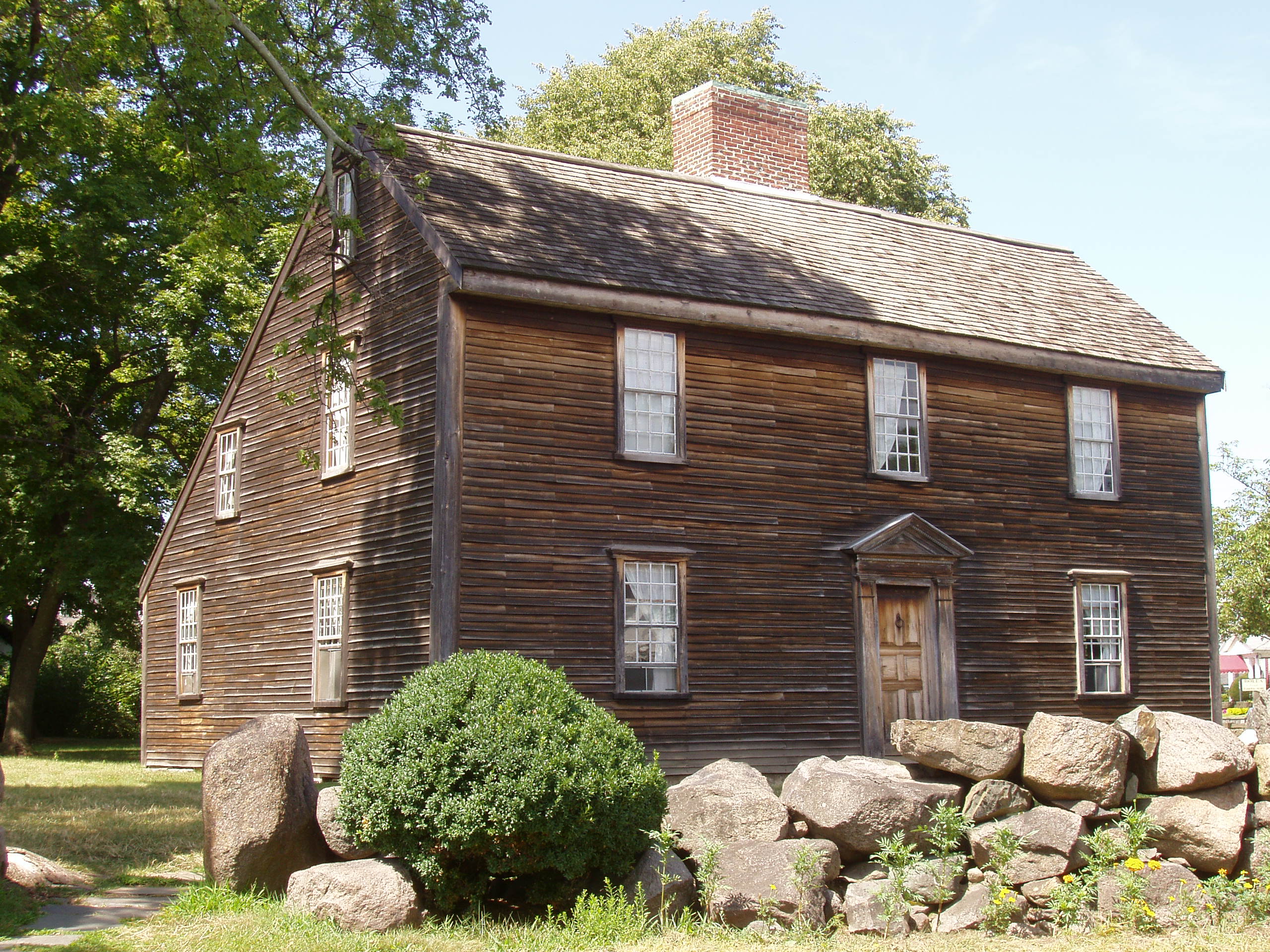
When people had to find wood to burn for heating and there was no A/C, they were much better at designing low energy homes, like this 'saltbox' style New England home.
Credit: Wikimedia Commons
Below is a timeline showing you the history of how people got by without active heating and cooling systems. You may notice some common trends, such as the usage of South-facing windows that capture the sun and the paying attention of where the sun is at various parts of the year for shading in the summer. These are pretty universal things that have only recently been abandoned.
- The Greeks in 5th century B.C. designed all homes with shelter to the North and openings to the South that take advantage of the winter sun.
- The ancient Romans, in the 1st century B.C. improved upon the Greek design by covering windows with mica or glass and by creating sun-rights laws that prohibited builders from blocking winter sun to other buildings.
- 1st to 4th Century A.D. The famous Roman bathhouses in the first to fourth centuries A.D. had large south facing windows to let in the sun's warmth.
- Sunrooms on houses and public buildings were so common that the Justinian 6th Century A.D. Code initiated "sun rights" to ensure individual access to the sun.
- Native Americans in the Southwestern United States built their homes in East-West rows with spacing that prevents winter shading.
- Early New England homes were built in the "saltbox" style that had two stories on the South wall, with vines to provide summer shading and only one story on the North wall, with a steeply sloped roof to protect from Winter winds.
- 1947 Passive solar buildings in the United States were in such demand, as a result of scarce energy during the prolonged W.W.II, that Libbey-Owens-Ford Glass Company published a book entitled Your Solar House, which profiled forty-nine of the nation's greatest solar architects.
- Mid-1950s Architect Frank Bridgers designed the world's first commercial office building using solar water heating and passive design. This solar system has been continuously operating since that time and the Bridgers-Paxton Building, is now in the National Historic Register as the world's first solar heated office building.
- 1999 Construction was completed on 4 Times Square, the tallest skyscraper built in the 1990s in New York City. It incorporates more energy-efficient building techniques than any other commercial skyscraper.
Even more: News and
the FAQ California Solar Center - Solar Thermal HistoryHistory of solar thermal and some passive solar design techniques.
Click now to view California Solar Center - Passive HistoryHistory of passive solar design
Click now to view California Solar Center - Passive HistoryHistory of passive solar design
Click now to view California Solar Center - Passive HistoryHistory of passive solar design
Click now to view California Solar Center - Passive HistoryHistory of passive solar design
Click now to view
 Tomo Says:
If anyone wants to know, grass is tasty. That's why we dogs eat it sometimes. No other reason. Just tasty.

 Get the Facts
 Do Your Part
 Transportation
 Making Energy
 Using Energy
 Basic Needs
 Nature
 Climate Change


 Support SixLinks