Where we need to be
The future will hopefully hold a place where new and existing homes are built with future energy usage in mind. Even more importantly, however, is that we will need to be retrofitting existing homes to be more efficient. The average home is approximately
30 years old and new homes built every year make up less than
2% of the total number of homes in existence. It also takes
65 years for the carbon emissions of a new energy-efficient home to make up for the resources used by demolishing an old home and building it new, so it's important to work with what we have already.
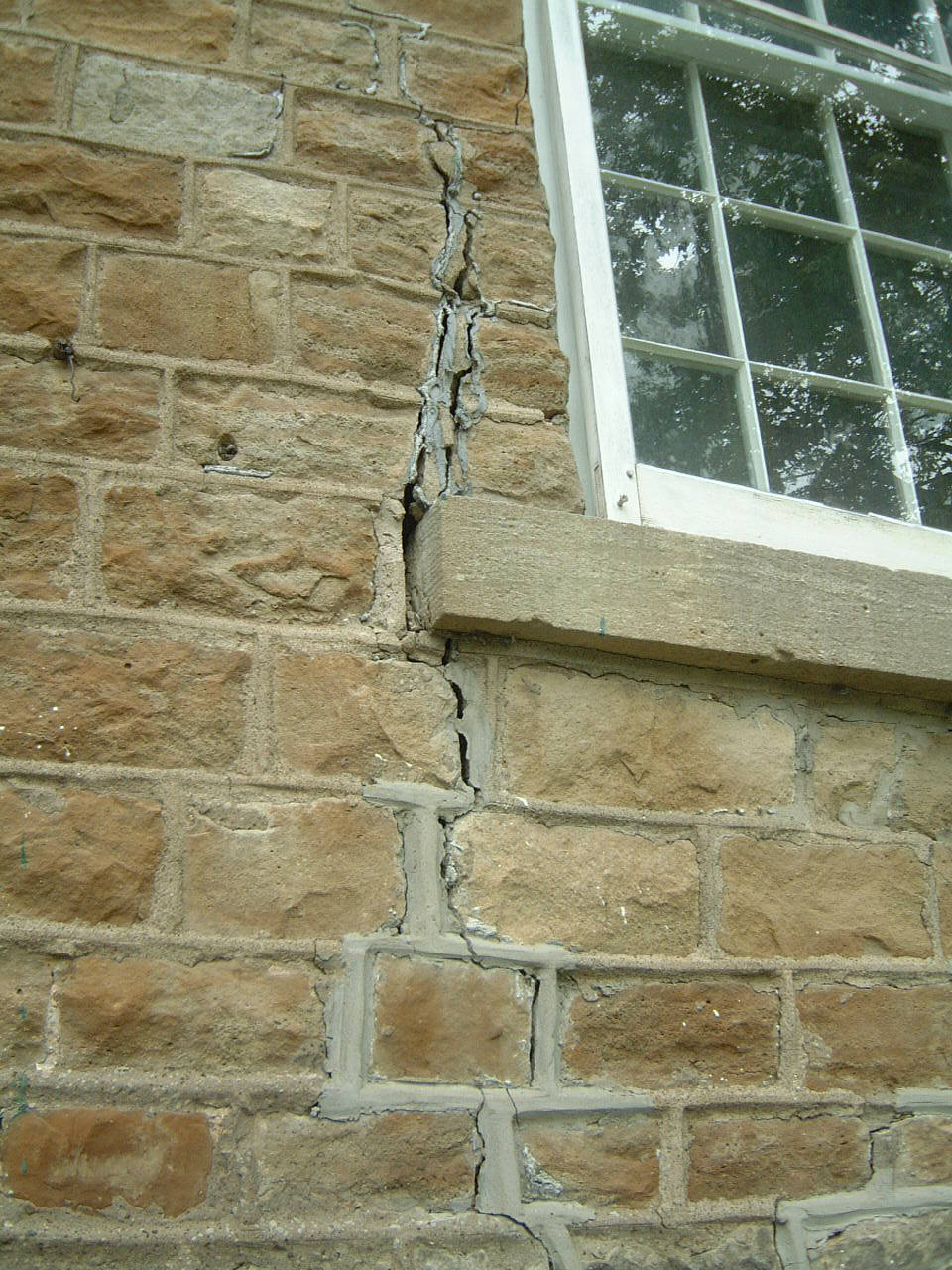
We need to all live in buildings that can hold in warm or cool air. Cracks like this allows air you spent money and energy on to get outside.
Credit: Wikimedia Commons
Improving the efficiency of homes includes ensuring that there are no cracks or leaks to the outdoors, that the homes have good insulation, windows, and doors, and that the homeowner is not asking more of the heating and cooling system than he has to. The importance of setting reasonable temperatures on your thermostat can not be overlooked. In the future, this will need to include having at least programmable thermostats, if not more advanced automation systems, in every home to allow the homeowner to stop heating or cooling the home when he's not around.
Cutting the heating and cooling load of an existing home in half could save about
25% of the total energy used by the home. That's almost as much energy as would be saved by
not owning lights, computers, or most other appliances.
This is low hanging fruit in the attempt to reduce our total CO2 emissions. Check out the tool in the Why It's Important section to figure out how you can do more to save energy and money on your own home. Doing this is a major part of any attempt to live a more sustainable life, and it is easy to do and has a very easy to calculate potential for money savings. Check out the Save Money section to learn how to figure out just how much money you will be saving.
US Building StatisticsNumber of residential buildings completed by quarter from 2002 - 2008.
Click now to view TIME - Renovating Historic BuildingsTIME article on the importance of renovating old, historic buildings to reduce energy consumption.
Click now to view EIA - 2005 RECSDOE Residential Energy Consumption Survey (RECS) from 2005
Click now to view EIA - 2005 RECSDOE Residential Energy Consumption Survey (RECS) from 2005
Click now to view

 Get the Facts
 Do Your Part
 Transportation
 Making Energy
 Using Energy
 Basic Needs
 Nature
 Climate Change


 Support SixLinks