Why it's important
As with many things, finding a more efficient way to drive is great, but no substitute for doing less of it. We use a lot of energy driving and the quickest way to reduce that number is to simply drive less. It will reduce our total carbon emissions, reduce our energy usage, reduce total toxic emissions, and also likely save money and in some cases promote healthier lifestyles. We understand that some things will always be done by car or truck, but many things that we currently use cars to do can be done without them. This section is about why that is important.
Many things that we currently use cars to do can be done without them
As is the focus in the other transportation sections, driving less is mostly about reducing greenhouse gases that are causing climate change. For more information about greenhouse gases and climate change, click over to the
Climate Change link. The second most important issue is reducing total energy usage, the importance of which is talked about in the
Using Energy link. There are also non-greenhouse gas toxins associated with driving gasoline vehicles as well as the ability to save money and become a healthier person.
Greenhouse Gases
CO
2 is the primary greenhouse gas released from automobile fuels, although there are others as well. In 2006, the
world emitted 6.45 gigatons of CO
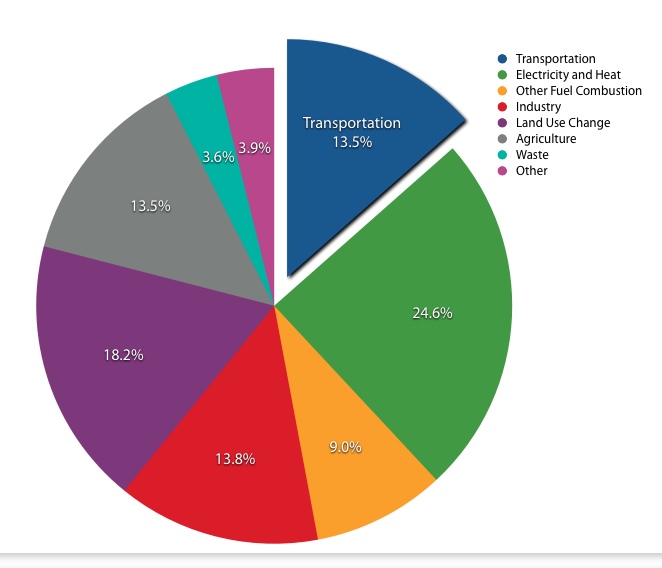
2 as a result of the transportation sector. Transportation accounts for approximately 13% of the total greenhouse gas emissions. This is expected to grow by 40% by 2030. While not all of this is from the cars and trucks you drive on a day to day basis,
62% of it is.
Energy
Getting somewhere is always going to take some amount of energy, the important thing is figuring out how much energy one method will take over another. The chart below shows the approximate amount of energy per person used to travel one mile via foot, bicycle, train, bus, airplane, and car. You'll notice that there are some interesting things to take into account, such as how many people are using a certain vehicle and, for walking and biking, what your diet is like. As we said, there is no free energy, so the energy you use to walk or bicycle is in part dependent on the energy intensity of your food source. For more information on this check out the
Eat Less Meat section. Also note that the train here is referring to commuter trains, not light rail, which typically runs on electricity and so is more variable based on the energy source.
Other Toxins
Besides greenhouse gases, automobile fuels emit a few other
dangerous toxins that would be reduced by driving less:
- Hydrocarbons: These are released when fuel does not burn fully and can lead to the formation of ozone as well as being toxic and potentially cancer-causing itself.
- Nitrous Oxides (NOx): With hydrocarbons, NOx can lead to the formation of ozone, which creates smog, irritates the eyes, causes lung damage, and aggravates respiratory problems. It can also help lead to the formation of acid rain, which can be damaging to plants, crops, and water sources.
- Carbon Monoxide (CO): This is a molecule dangerous because in high concentrations it can cause the blood to carry less oxygen. It is especially dangerous for those with heart disease.
Money and Health
Driving is an expensive process between purchasing and maintaining a vehicle and keeping it filled up with gasoline. Driving less by carpooling, taking public transit, walking, biking, or making better driving planning decisions can save a lot of money in the long run. It is important to factor these things in when considering how you are going to get places.
Walking and biking also have the advantage of helping to improve health. If you are going to go someplace, you'd might as well get some exercise while doing it. One of the major complaints of these methods of transportation is the amount of time it takes, but this time can be saved if you walk to the store instead of driving to the store and then going to the gym to work out.
Zimbio - International Transportation EnergyReport from January 2009 on the amount of energy used by the transportation sector internationally.
Click now to view EPA Light Vehicle GHG EmissionsMarch 2006 report on percentage of GHG emissions from the transportation sector attributable to the light vehicle fleet.
Click now to view EPA Automobile ToxinsPDF of EPA document EPA400-F-92-007 - "Automobile Emissions: An Overview (PDF)"
Click now to view
 Tomo Says:
Did you know that improvements and suggestions to SixLinks are voted on by people like you?
Check it out!

 Get the Facts
 Do Your Part
 Transportation
 Making Energy
 Using Energy
 Basic Needs
 Nature
 Climate Change


 Support SixLinks