Where we've been
For the vast majority of human existence, we have gotten around by either walking or harnessing the energy of other creatures that we walking. It is only relatively recently that we moved from walking to bicycling to public transport and then to personal vehicles. It is time to take a few steps back and stop relying on the personal vehicle quite so much. The number of vehicles in use worldwide has grown from about
122 million vehicles in around 1960 to
812 million in 2002. This correlates to an increase from
41 to 130 vehicles per 1000 people in that same time period.
1940: First time bus ridership exceeds rail ridership
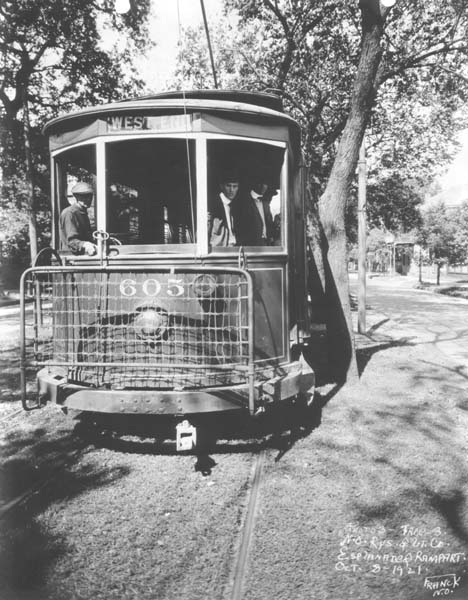
There was a time when we relied on vehicles other than the car for getting around. We are not going to go back to getting around solely by mass transit and walking and biking, but we should get closer.
Credit: Wikimedia CommonsImportant Milestones in Public Transport
The list below points out some interesting and
important milestones in the adoption of public transportation. For more information on the history of the personal vehicle, go to the
Where We've Been page of the Transportation Overview section.
- 1827: New York implements the first horse-drawn urban stagecoach line
- 1830: Baltimore introduces the first railroad, the B&O
- 1832: New York implements the first horse-drawn street railway line
- 1835: New Orleans installs the oldest street railway line still operating
- 1871: New York has the first steam-powered elevated line
- 1872: Horse influenza epidemic in the Eastern United States kills thousands of horses
- 1873: San Francisco has the first successful cable-powered line
- 1884: Cleveland introduces the first electric street railway line
- 1895: Chicago has the first electric elevated rail line
- 1898: Boston implements the first electric underground street railway line
- 1905: New York has the first bus line
- 1910: Hollywood, CA implements the first trolleybus line
- 1912: Cleveland is the first street railway to operate buses
- 1917: New York closes the last horse-drawn street railway in the United States
- 1926: Highest peacetime public transportation ridership before World War II at 17.2 million people
- 1939: Chicago has the first street with a designated bus lane
- 1940: First time bus ridership exceeds rail ridership
- 1940: San Francisco becomes the last surviving cable car transit system
- 1962: Seattle introduces the first monorail
- 1972: Lowest public transportation ridership in the 20th century in the United States at 6.6 million people
Even more: News and
the FAQ NYU Dept. of Economics - Report on Vehicles Ownership and IncomeNYU economics report showing the correlation between income, population density, and vehicle ownership worldwide.
Click now to view NYU Dept. of Economics - Report on Vehicles Ownership and IncomeNYU economics report showing the correlation between income, population density, and vehicle ownership worldwide.
Click now to view NYU Dept. of Economics - Report on Vehicles Ownership and IncomeNYU economics report showing the correlation between income, population density, and vehicle ownership worldwide.
Click now to view American Public Transportation AssociationImportant milestones in public transportation
Click now to view

 Get the Facts
 Do Your Part
 Transportation
 Making Energy
 Using Energy
 Basic Needs
 Nature
 Climate Change


 Support SixLinks