Why it's important
We use energy from very dirty sources and that needs to change. Ultimately, all of the energy on Earth comes from the sun, so it makes sense to cut out as many steps between it and our light bulbs as possible. Solar power is a clean energy source that requires little energy or money to maintain once it's running and the best part is, the sun hits the Earth every day, so it is the ultimate renewable energy source.
The sun hits the Earth every day, so it is the ultimate renewable energy source
Some types of solar power are more expensive than others, but solar thermal systems tend to be quite inexpensive and will pay back over only a few years in most cases. And from an electrical stand point, Concentrating Solar Power (CSP) can efficiently produce energy similar to how coal plants do, just by using heat from the sun instead of from the burning of coal. There are some fears about what happens on a cloudy day and what happens if you live where it's cold and dark, but these are mostly not major issues.
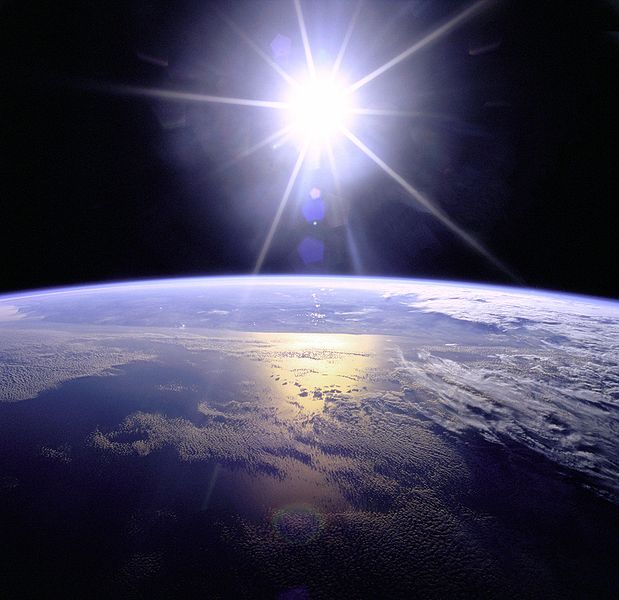
A sunburst over Earth. The sun is always shining somewhere on the planet and is the ultimate renewable energy.
Credit: NASAIntermittence
Much of the criticism of solar energy is that you would have no energy if it was cloudy. This is a gross simplification of the issue, however. The first thing to remember is that solar works even when it's cloudy, just not as well as when the sun is shining. Also, energy storage systems go a long way to help reduce the intermittence issue. Using solar to heat your hot water? Your hot water tank is a storage system, simply heat up a large amount of water when the sun is shining and it can help you through cloudy days and night times. Relying on solar power for your electricity? The electrical grid takes energy from a wide number of sources, so that when it's cloudy, perhaps it is windy as well, and so you can pick up the extra energy there.
For large scale implementations, large scale energy storage would be helpful to minimize these problems. You can read more about this
here. It is also important to remember that if you have to use a backup system every once in a while, it's not the end of the world; using fossil fuels 5% of the time and solar 95% of the time is still a big improvement.
Location
It's true that solar is going to work better in the desert than the tundra, but that's not to say that you need 300 days of sunshine a year to have a home-scale solar energy system. Solar thermal systems work particularly well even in cool cloudy conditions and can pay back quickly almost no matter where you install them. You can check out our tool on the
How We Get There section to see how solar thermal would perform in your region. Photovoltaic systems are a little bit more picky about the amount of sun they are exposed to, but can still work in cool cloudy areas, just not to their peak efficiency. The only time that location really matters is for large scale CSP installations, where you are trying to do everything you can to maximize efficiency due to its size.
 Tomo Says:
Did SixLinks help you out? Return the favor by becoming a
supporting member!

 Get the Facts
 Do Your Part
 Transportation
 Making Energy
 Using Energy
 Basic Needs
 Nature
 Climate Change


 Support SixLinks