Where we need to be
We need to have as much clean energy as possible to displace the fossil fuels we currently rely on. While wind, solar, and potentially nuclear are likely going to lead this effort, each of the technologies discussed in this section also has a potential role to play.
Geothermal could quickly rise up into a major player in the future of energy production
Tidal and Wave Power
Tidal and wave power could be a great compliment to offshore wind facilities to power seaboards and port cities. It is estimated that by 2025,
three-quarters of the world's population will live within 200km (124 miles) of a coast, up from
two-thirds now. This means that much of our energy demand will be concentrated in densely populated areas near the shore. This makes off-shore energy production very attractive if it could become cost competitive and avoid causing major environmental damage.
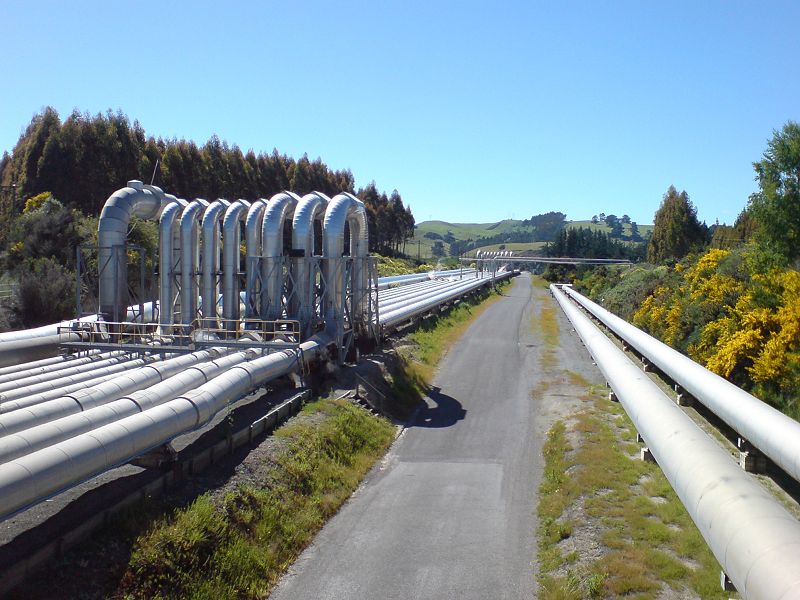
If the Binary Cycle geothermal plants succeed, we may be able to provide heat and electricity to a lot of the world without needing hot steam to move through these sorts of pipelines.
Credit: Wikimedia CommonsGeothermal
Geothermal has the potential to provide at least heating, if not electricity on a large scale to a large part of the world. If the new technologies that are being implemented on prove themselves, geothermal could quickly rise up into a major player in the future of energy production. Because it does not have an intermittent supply, it could be used for a stable, consistent base power supply.
Biomass
Biomass will likely continue to be a player in the world's energy portfolio, but it's potential needs to be limited to ensure sustainable usage. We should be using some biomass, but need to be aware of the indirect emissions that can result from land use changes. We need to eliminate unsustainable practices of deforestation and be sure to take ecological impacts of harvesting these materials into account. Using otherwise unused biomass, which is otherwise discarded as waste, would definitely not be a bad thing, however.
Clean Coal
Building coal plants that capture and store the CO
2 emissions would definitely be better than building those that don't. There are still a number of other issues associated with coal, such as health and environmental problems caused by mining and the other toxic pollutants that are emitted when it is burned. From a carbon emissions standpoint, though, if all the CO
2 were captured, coal could be considered a clean energy source (although not a renewable one). This would allow countries with a lot of coal reserves, such as the US and Australia, to continue using and exporting those resources. This would require significant financial investments, would result in huge cuts in efficiency, and would need a lot of storage space that would be better used to store carbon that we
Pull Out of the Air.
South African Educational Portal - CoastsReport on the future of coastal populations around the world.
Click now to view South African Educational Portal - CoastsReport on the future of coastal populations around the world.
Click now to view

 Get the Facts
 Do Your Part
 Transportation
 Making Energy
 Using Energy
 Basic Needs
 Nature
 Climate Change


 Support SixLinks