Why it's important
People need to be able to eat and there are many, many people around the world who can't meet this basic need. Besides it being important for the obvious humanitarian reasons, it's unlikely that a person is going to be particularly worried about their environmental impact when they are having trouble finding food. Getting people the ability to have access to food is an important component of meeting the world's
Basic Needs. Until we meet those basic needs, there is no way that we are going to be able to address the unsustainable actions, such as slashing and burning rainforest to make room for crops, that are the result of people trying to meet basic needs.
There have been epidemics as a result of using too much of the same plant
Besides thinking about why food in general is important, it's also good to look at why each of the basic components of getting people food are important. The first component of having food is having access to financial instruments that allow for saving your income, establishing a reliable income, and having access to capital. If you are an average consumer, you need to be able to have money and to save and get at your money in order to purchase food. If you are looking to grow the food yourself, you need to be able to have access to capital to purchase equipment to run your farm.
If there is going to be food grown near you or by you, it is important that there be good soil and non-toxic water. The soil needs to have enough nutrients and be stable enough to actually grow the food. And the soil and water both need to have few enough toxins in them that the plants can grow and that they are safe to eat. Plants are often quite good at pulling toxins out of the soil and water and then passing them on to whatever eats them.
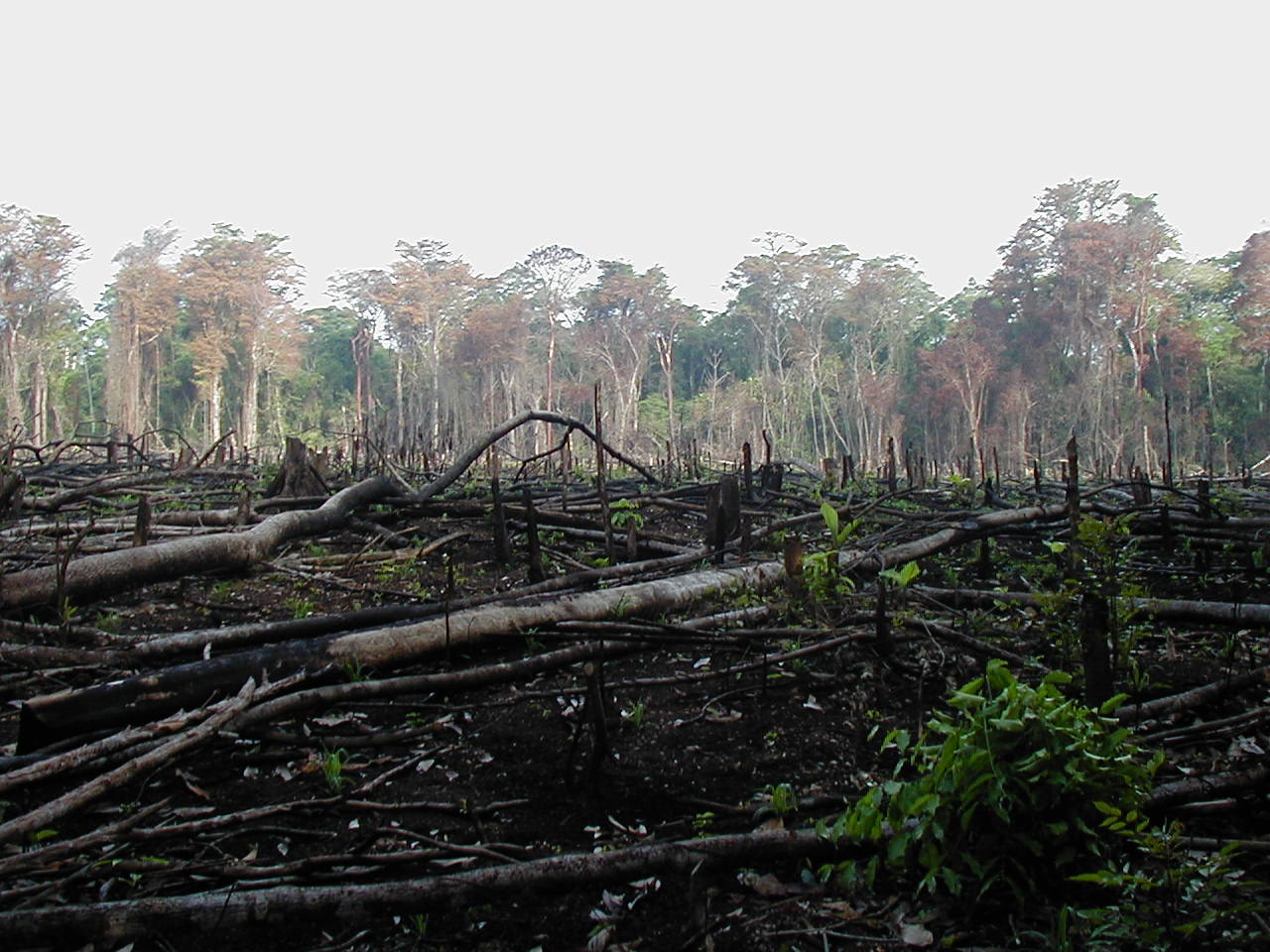
Burning of forests for agriculture releases a lot of CO
2 and contributes to climate change. However, this issue can not be addressed if this is the only way for people to get food.
Credit: Wikimedia Commons
Finally, someone needs to have access to plants to grow. Often this means being able to reliably get seeds with which to grow crops. Even more than getting seeds, however, they must be seeds to proper crops. This means crops that are adequately nutritious (that is the point, after all), crops that grow well in the climate, and crops that are diverse enough to not be wiped out by a single disease. Reliability of a food source is very important, and is sometimes compromised for potentially higher yields. This can not happen when these crops are being relied upon to keep people alive.
Something confusingly called the Green Revolution attempted to end world hunger by teaching those in developing countries how to plant crops proven to have excellent yields. Unfortunately, these plants were proven to have excellent yields where they were developed, not in Africa or any other place they were being planted, where they required too many resources such as
water and fertilizer, and didn't have the right soil. India, Afghanistan, and Western Pakistan have all had epidemics in green revolution varieties of wheat, with yields reduced as much as
85% in some years. Year-to-year fluctuations in yields have been greater since the introduction of new, better performing, green revolution breeds that have been widely planted. Maximum production in some years has been traded for reliability and consistency of production.
Similarly, there have been epidemics as a result of using too much of the same plant. The potato famine in Ireland was the result of having too many of the same variety of crop grown, many of which were wiped out by a single disease. A similar thing happened in the US in the early 1970s, where a
quarter of the US corn crop was destroyed because of a disease that affected a single corn variety that happened to be 70% of all the corn planted in the country. These sorts of mistakes need to be avoided to ensure a reliable food crop.
Oregon State University - Crop DiversityReport on how the green revolution has created a loss of crop diversity
Click now to view Oregon State University - Crop DiversityReport on how the green revolution has created a loss of crop diversity
Click now to view Oregon State University - Crop DiversityReport on how the green revolution has created a loss of crop diversity
Click now to view
 Tomo Says:
Did SixLinks make your life any easier? Return the favor by becoming a
supporting member!

 Get the Facts
 Do Your Part
 Transportation
 Making Energy
 Using Energy
 Basic Needs
 Nature
 Climate Change


 Support SixLinks