How we get there
We need to either pick a system for charging stations and build cars that work with that system or continue to make improvements in both types of systems and implement them both. The biggest thing for getting where we need to be, however, is having the plug-in vehicles to actually charge, to create the demand for these technologies.
Accounting for energy use is a big point that has not yet been standardized
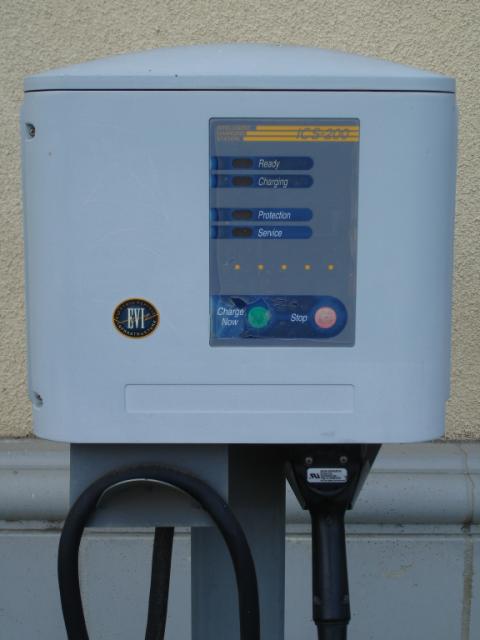
We need more of these sorts of charging stations and they need to be smart enough to work with the utilities to account for the energy used.
Credit: Alachua County Government
Plug-in infrastructure will require more research into rapid charging technologies, communications between vehicles and charging systems, and better interfacing the power grid. Rapid charging technologies are under development at a number of research institutions but do not appear to yet be brought to market on a wide scale, likely because there aren't very many vehicles that need to be recharged at the moment. The bigger issue is working on getting local charging stations like those popping up in random cities that allow you to charge your car in a parking lot or in your home.
The technology for these systems exists today, however accounting for energy use is a big point that has not yet been standardized. There are a lot of vehicle to grid communications protocols out there, and some system needs to be decided on and put in place for making recharging easy and affordable without requiring utilities to give away power. This will likely require help and cooperation from the utility companies and regulatory agencies. Getting utilities working with municipalities and property owners to figure out how to provide around town charging is going to be very important to the success of plug-in hybrids.
Having charging stations that rely on battery swaps involves the simple charging stations mentioned above as well as working with companies like Project Better Place and the car manufacturers. Car manufacturers need to build vehicles with removable battery packs that work with the battery swap stations. Companies and municipalities will need to work together to build battery swap stations. These will need to be built in advance of the production of the vehicles so that there are in fact places to swap out batteries. This is likely to cause this sort of an infrastructure to be rolled out slowly, starting in select cities before moving across entire countries.
 Tomo Says:
Tummy rubs are the best thing ever. Seriously.

 Get the Facts
 Do Your Part
 Transportation
 Making Energy
 Using Energy
 Basic Needs
 Nature
 Climate Change


 Support SixLinks