Where we are
Biodiesel is beginning to pick up a following as a result of concerns about CO
2emissions and rising oil costs. It is not the same sort of great solution that electric vehicles and plug-in hybrids are, but it can be much better than petroleum diesel. Biodiesel can be a good solution for those vehicles that can not be replaced by electricity. This section covers the current state of biodiesel production and the current disadvantages that must be addressed to make biodiesel a better fuel.
Biodiesel produced from soybeans is actually a bit worse than petroleum diesel
Production
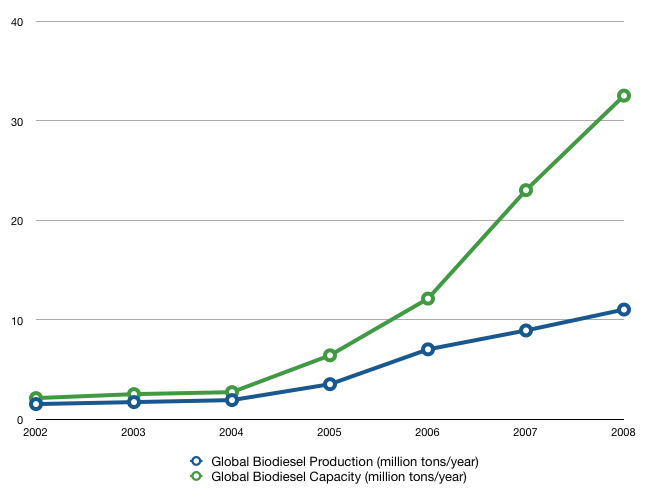
The US biodiesel industry is rapidly growing, with special focus from companies already making products from vegetable oil or animal fat. The potential limiting factor is the saturation of the glycerin market, biodiesel's co-product.
Currently, the largest market is for fleet vehicles, with the National Biodiesel Board reporting that there are over
100 such fleets using biodiesel in the US. The most common form of biodiesel in the US is in a B20 blend. B20 has the advantage of performing well at cold temperatures and being capable of being stored and distributed using similar methods to diesel, whereas B100 distribution by pipeline is
still in experimental stages
Feedstock
A
new report by the US EPA highlights the importance of looking at where our biodiesel comes from. It found that biodiesel produced from soybeans is actually a bit worse than petroleum diesel in the short term. Biodiesel made from waste grease, however, had CO
2 emissions reductions of about 80%. We will soon have graphs below showing the source of most biodiesel that is available today.
Availability
100% biodiesel is now available at
many service stations across Europe. You can use
this website to find current biodiesel retailers in the United states.
Disadvantages
Despite all of the potential advantages of biodiesel, there are still some
disadvantages of using biodiesel.
Automaker Warranties
Most engine makers warranty their components for up to a B5 blend, but higher blends may void warranties.
Lower Fuel Economy
There is about a
10% reduction in energy output of a gallon of biodiesel compared to petroleum diesel, lowering the range on a single tank of fuel. For B20, this can mean a
1-2% difference.
Cost
Pure biodiesel can cost anywhere from
$1.95-$3.00 per gallon, while B20 blends average about 30-40 cents higher per gallon, although this obviously varies. One of the major factors affecting price is the availability in a particular area. Biodiesel is typically not pumped through pipelines, so tends to be sold close to the point of production.
NOx Emissions
Biodiesel has a slight
increase in nitrous oxide emissions compared to petroleum diesel, although the smog-factor of this increase is offset in reductions in unburned hydrocarbon emissions.
Temperature Problems
The point at which biodiesel begins to gel is referred to as its cloud point. It varies widely depending on the particular mix of esters found in the fuel and so the feedstock used to produce the fuel. However, there are some feedstocks that have cloud points as high as 60°F. While they are not all this high, it brings up the fact that B100 may not act well under cold conditions and that the fuel must either be heated or not used year-round in cold climates.
Engine Durability
While beneficial to engine wear in newer engines, older vehicles, such as those made before 1992, can
experience clogging due to a large amount of debris loosened by biodiesel entering the fuel filter. Biodiesel also wears down natural rubber and so may break down older fuel lines and pump seals. This is not usually a problem with newer engines.
Water Interactions
Although hydrophobic, biodiesel does sometimes attract small amounts of water if the reaction used to create the fuel was not fully completed. There are a number of
concerns with water mixing with biofuels:
- Water reduces the heat of combustion, creating more smoke, harder starting, and less power
- Water causes the corrosion of fuel system components
- Water freezes, creating ice crystals and accelerating the gelling of the fuel
- Water accelerates the growth of microbe colonies that can grow in biodiesel tanks. This is especially a problem with heated fuel tanks.
- Water can cause pitting in the pistons on a diesel engine
Food vs. Fuel
All biofuels have come under some criticism for
food vs. fuel debates. The reasoning goes that burning something that can be used for food causes food for the poor to be replaced by fuel for the rich. Even if direct food isn't used for fuel, any agricultural crop used for food could cause pressure for farmers to take up that crop instead of a normal food product. Therefore, only non-food fuels grown on marginal lands are going to be exempt from this controversy. This is the reason why biodiesel created from soybeans can actually release more greenhouse gases initially, because it could result in deforestation to make more crop land.
DOE - BiodieselDOE EERE Alternative Fuels and Advanced Vehicles information on biodiesel
Click now to view EPA Biofuels GHG ReductionsEPA report on estimated GHG reductions of various biofuels over 30 and 100 year timeframes.
Click now to view Fueleconomy.gov - BiodieselGovernment website on pros and cons of biodiesel
Click now to view DOE - BiodieselDOE EERE Alternative Fuels and Advanced Vehicles information on biodiesel
Click now to view
 Tomo Says:
Did SixLinks make your life any easier? Return the favor by becoming a
supporting member!

 Get the Facts
 Do Your Part
 Transportation
 Making Energy
 Using Energy
 Basic Needs
 Nature
 Climate Change


 Support SixLinks