Where we've been
The
history of nuclear energy begins with the discovery of uranium in 1789, by a German chemist. Then, in 1895, ionizing radiation was discovered. For the next 15 years, the concept of radiation was further explored, until 1911, when the concept of radioactive isotopes and the ability to trace them was realized. The 1930s saw research into the neutron and the idea of bombarding radioactive elements to start nuclear fission. In the 1940s, attempts to control this reaction, leading to a nuclear bomb, were pursued. This was referred to as the Manhattan Project.
Three Mile Island was a rather successful failure of a nuclear power plant
Following WWII, in the 1950s, nuclear boilers began to be produced that eventually led to nuclear power plants. In 1960, the first fully commercial nuclear reactor as we know them began operating and continued to do so until 1992. All around the world, countries began installing nuclear power plants.
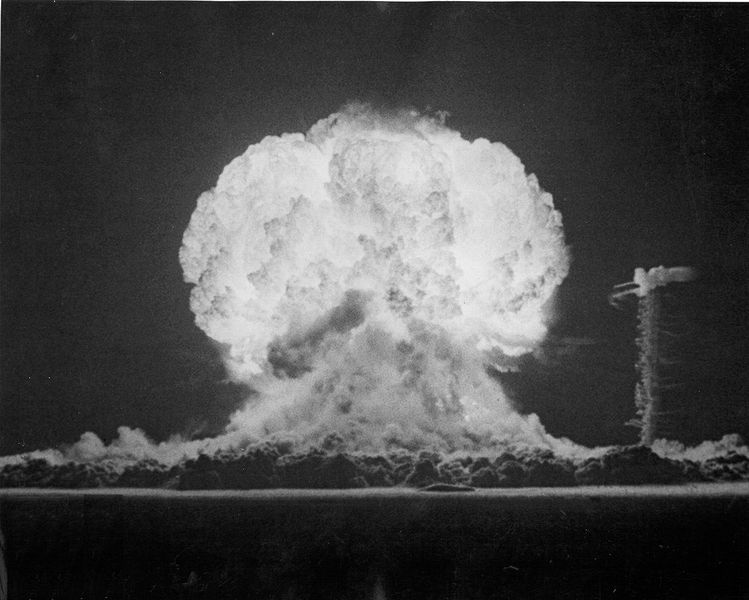
Operation Plumbbob Test (May 28, 1957) shot at a Nevada test site. Nuclear arms development put a lot of time and money into controlling nuclear reactions, leading the way for nuclear energy as an electricity source.
Credit: Wikimedia Commons
As the environmental movement began to pick up steam in the 1970s, people became more concerned with what to do with the waste from nuclear reactors. The Cold War made proliferation a concern as well. Beginning in the 1970s, demand for new nuclear reactors greatly decreased, with new reactors being produced at a slower rate than old ones were decommissioned by the mid 1980s. The Chernobyl and Three Mile Island incidents more or less put the nail in the coffin for nuclear energy. This despite the fact that Chernobyl was a result of a poor design that is not used anymore and Three Mile Island was a rather successful failure of a nuclear power plant in that there was very little radiation released.
It has only been very recently that the demand for new nuclear reactors has been considered again for the reasons we are mentioning it here. While there are some places, most notably France, that have stuck with nuclear power, many others are reconsidering it after not allowing new plants to be built for decades. The threat of climate change from fossil fuels has given nuclear energy a second chance.
Even more: News and
the FAQ
 Tomo Says:
Hi. Thanks for reading my little blurbs. I was beginning to think I was talking to myself!

 Get the Facts
 Do Your Part
 Transportation
 Making Energy
 Using Energy
 Basic Needs
 Nature
 Climate Change


 Support SixLinks