How we get there
This section describes the two different proposals to put a price on carbon, the carbon tax and the cap and trade system, as well as a third, which is a hybrid of the two, the cap and trade with a safety valve. It will also talk about the different things that the revenues from one of these systems can be used for. We need to adopt one of these systems, and this information should allow you to make intelligent decisions on how you want your government to go about pricing carbon.
The first key to carbon pricing revenue is making sure this money is actually made
Cap and Trade
A cap and trade system would work to lower the emissions of the greenhouse gases to a set level. A number of permits are issued and that number is reduced over time to meet a national emissions reduction target. These permits allow a certain amount of pollution and can be traded on the free market. In most systems, any group can buy these permits, including those who don't pollute, increasing the price of the permits by reducing the supply, or permits can be
donated to non-profits as tax deductions to reduce emissions faster.
This system takes advantage of the fact that some groups are better at reducing emissions than others, benefitting both emitters by allowing the efficient one to bring in additional income by selling its permits and the less efficient one by reducing the cost of meeting a standard while still reaching the ultimate reductions goal. The advantage of a cap and trade system is that, while costs are not necessarily predictable or stable, which is a downside to business, it predicts the emissions level that will be achieved, which is what scientists are worried about. Many scientists claim that there is a threshold at which we must maintain emissions regardless of cost because the
cost of not complying will be huge. Additionally, the Europeans and a number of states in the US have either implemented or plan to implement a cap and trade system that would be able to trade with a US system, creating an international marketplace, whereas the
chances of an international tax policy are next to none.
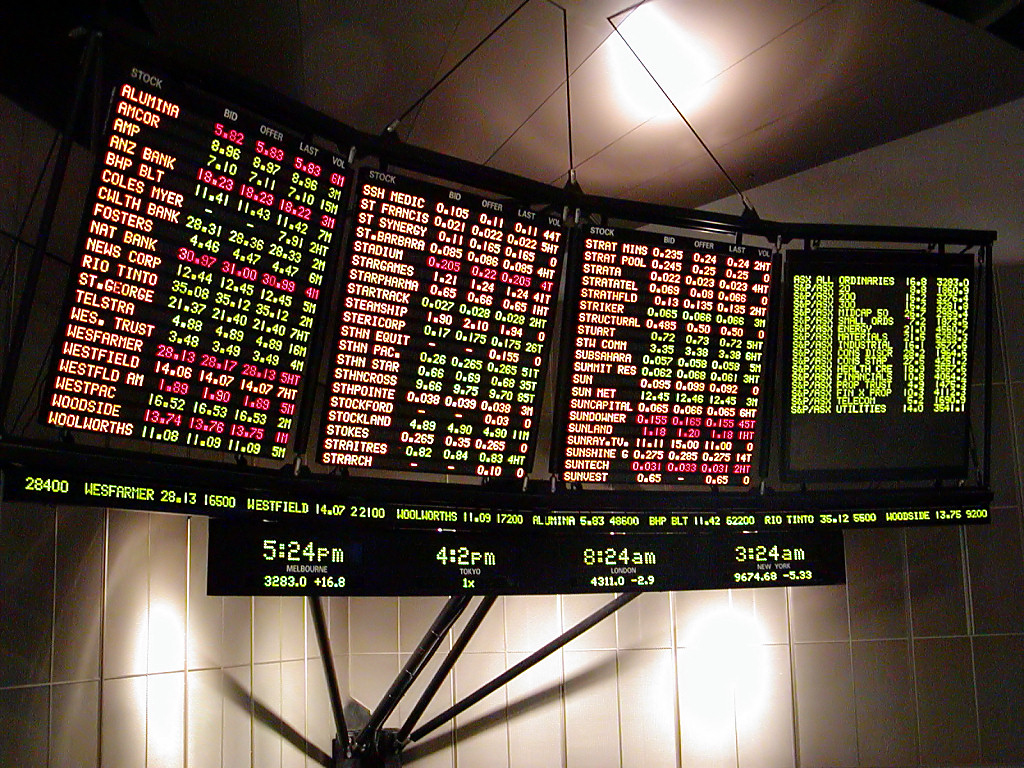
One way to price carbon is through a cap and trade, which creates tradable permits that can be bought and sold.
Credit: Wikimedia Commons Carbon Tax
A carbon tax, similar to the gasoline tax and tobacco taxes in the United States, is meant to raise the cost of producing greenhouse gases and provide a competitive advantage to alternative processes that are less carbon-intensive. One major advantage of this over a cap and trade system is that a carbon tax sets a definite price on carbon, leading to a known return on investment in energy efficient products and behaviors. It is much more predictable and
may encourage longer-term investments. If a utility company knows how much money it will cost to produce energy from coal versus wind over the next 20 years, they
may be hesitant to build new coal-fired plants. A carbon tax has advantages over a cap and trade system because it would potentially be easier to implement and monitor, with less of a chance for cheating and evasion if implemented properly.
The simplicity of carbon taxes also allows them to be implemented much sooner than cap and trade systems and are also more transparent, which is either a benefit or not, depending on the public's perception on the need to act. Another argument in favor of a tax is that we don't know where emissions need to be in the near term and that the environmental cost of a certain level of emissions over a short time is unknown, so that a tax should be used and raised until emissions hit a long-term target. Varying emissions yearly doesn't affect climate nearly as much as varying carbon prices yearly would affect economies, the importance is on movement towards long-term goals, according to some. Some argue that we must aim to reduce carbon emissions as much as possible, and then some, and that a cap and trade system, while mandating a certain amount of reduction, also limits reductions to that level economically. Plus, most cap and trade systems currently being discussed only include 40% of our emissions, those from electricity generation, and include a safety valve, which allows for more emissions (see below). More emissions can be allowed if special interest groups lobby for waivers or extra permits, which is what happened in Europe, where the first attempt at a cap and trade system resulted in
more permits than there were emissions to begin with.
Safety Valve
While not really a third option, per se, it is more of a
combination of the previous two options that is much more likely to exist than a pure cap and trade system. This is more or less a cap and trade system, but has a cost point built in at which permits can be bought directly from the government as opposed to on the free market. This places a ceiling on the cost of permits. If done properly, a cap and trade system with a safety valve can be manipulated by setting this trigger place and the number of permits available in a way that gives the government maximum flexibility with regards to the program. It can be seen as a best of both worlds, but could also become a worst of both worlds, where if the trigger price was set too low, you would essentially end up with the industries all paying the government a fixed small amount to pollute, as opposed to encouraging reductions in pollution. This system would allow the system to fail by either of the means the cap and trade or tax could fail, namely too many permits, or too low a cost of carbon.
Revenues
The first key to carbon pricing revenue is making sure this money is actually made; some cap and trade proponents have argued for giving away the permits as opposed to auctioning them off. There are four main places that this money could go, first is back to the industry, paying for R&D, credits for green technologies, green-color job training, etc, the second option is to the public to offset the higher energy costs that any system would create, the third is into developing countries, to help them adapt to climate change and address energy-poverty issues, and the fourth option is that the money makes it to another area of the government budget and is spent on paying down debt or to fund other programs. This fourth option needs to be avoided, and realistically, the third option is not likely to be a huge part of any plan, as we will look out for out own economy before others.
So the debate is the extent to which money will be reinvested in industry or given back to the people, the difference between
"cap and invest" and "cap and dividend", as the Natural Resources Defense Council (NRDC) has recently put it (or "tax and invest", "tax and dividend"). The NRDC wants to start with a cap and invest and move towards a cap and dividend, however, it is more likely that there will need to be a combination of both. Industry is likely going to be able to lobby for some of the profits, but there will also need to be money returned to lower income Americans to help offset rising energy costs a tax or cap and trade system will intentionally bring. Without rebates for the poor, any tax on carbon is a regressive tax, like the sales tax, as opposed to a progressive tax like the income tax.
Washington Post - Carbon TaxArticle on the increasing popularity of the idea of a carbon tax versus a cap and trade system
Click now to view Daily Green - Carbon TaxOverview of what a carbon tax would mean to Americans
Click now to view Carbon Tax Center - Tax vs. Cap and TradePros and cons of a carbon tax versus a cap and trade system
Click now to view Carbon Tax CenterNews and background information on the progress towards a carbon tax
Click now to view
 Tomo Says:
I've never been to Spain, but the rain in Portland falls mainly on the yard.

 Get the Facts
 Do Your Part
 Transportation
 Making Energy
 Using Energy
 Basic Needs
 Nature
 Climate Change


 Support SixLinks